
Introduction
Artificial Intelligence is rapidly transforming the way businesses operate, communicate, and innovate. While traditional AI systems have already improved automation and decision-making, a new generation of intelligent systems is taking center stage. Agentic AI represents the next evolution of artificial intelligence, enabling software systems to act independently, make decisions, use tools, and complete complex objectives with minimal human intervention.
Organizations worldwide are increasingly investing in AI-powered solutions that can perform tasks autonomously, collaborate with humans, and continuously improve their performance. Unlike conventional automation tools that rely on predefined workflows, modern intelligent systems can reason, plan, adapt, and execute actions in dynamic environments.
From customer support and sales automation to software development and enterprise workflow optimization, autonomous systems are redefining productivity across industries. Businesses that adopt these technologies early are gaining competitive advantages through improved efficiency, reduced operational costs, and enhanced customer experiences.
This comprehensive guide explores autonomous AI systems, intelligent assistants, enterprise automation, development frameworks, use cases, implementation strategies, challenges, and future trends.
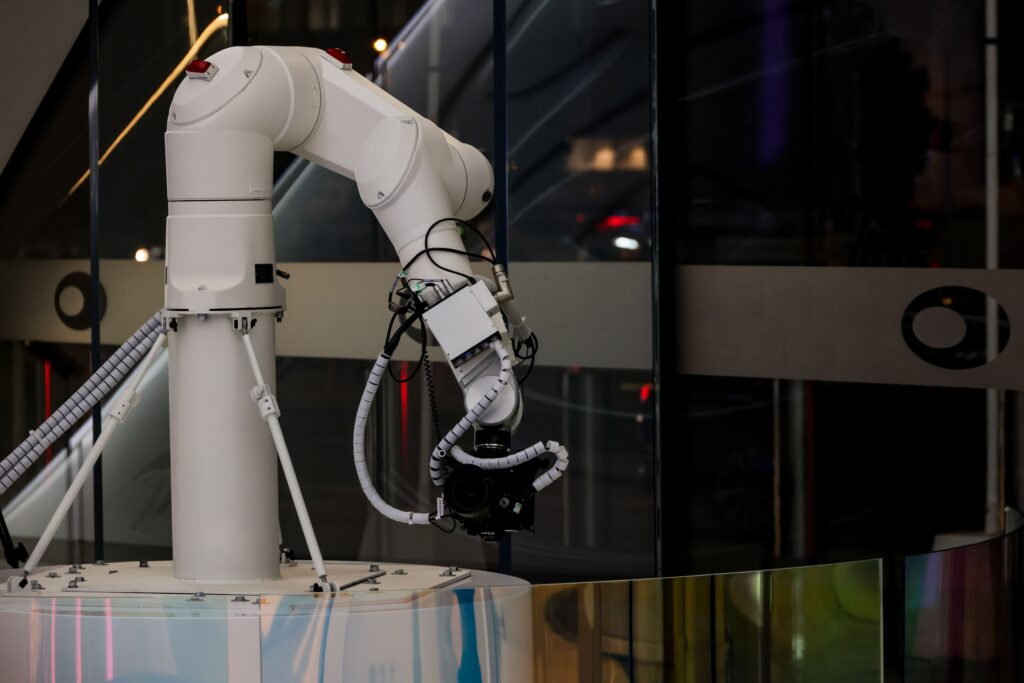
What Is Agentic AI?
Agentic AI refers to intelligent systems capable of independently pursuing goals, making decisions, interacting with tools, and adapting to changing conditions without requiring continuous human supervision.
Unlike traditional AI models that simply generate outputs based on user prompts, these advanced systems can:
- Plan multi-step actions
- Execute complex workflows
- Use APIs and external tools
- Access databases and knowledge systems
- Learn from feedback
- Collaborate with other intelligent agents
- Optimize outcomes over time
These capabilities enable organizations to automate sophisticated business processes that previously required human intervention.
How Autonomous AI Systems Differ from Traditional AI
Traditional artificial intelligence focuses primarily on prediction, classification, recommendation, and content generation.
Autonomous systems extend these capabilities significantly.
| Traditional AI | Autonomous Systems |
|---|---|
| Responds to prompts | Pursues objectives |
| Single interaction | Multi-step execution |
| Limited memory | Persistent memory |
| No planning | Strategic planning |
| Minimal tool usage | Extensive tool integration |
| Human-driven workflow | Self-directed workflow |
This evolution is making AI more practical for real-world business applications.
Core Components of Intelligent AI Agents
Modern AI agents consist of multiple interconnected components that work together to achieve goals.
Goal Management
Every intelligent system operates around objectives. Goals guide decision-making and determine the actions required to achieve desired outcomes.
Examples include:
- Resolving customer support tickets
- Scheduling meetings
- Conducting market research
- Managing inventory
- Automating sales outreach
Planning Engine
Planning enables AI agents to break large tasks into smaller manageable actions.
For example:
- Identify objective
- Gather information
- Analyze data
- Choose strategy
- Execute tasks
- Evaluate results
Memory Systems
Memory helps intelligent systems retain information across interactions.
Types of memory include:
Short-Term Memory
Stores current task context.
Long-Term Memory
Retains historical information for future use.
Semantic Memory
Stores structured knowledge.
Episodic Memory
Records past experiences and outcomes.
Tool Usage
Advanced systems interact with:
- APIs
- Databases
- CRM software
- Analytics platforms
- Email systems
- Cloud applications
Tool integration dramatically expands capabilities.
Why Businesses Are Adopting Agentic AI
Organizations are embracing Agentic AI because it delivers measurable improvements in productivity and efficiency.
Key benefits include:
Increased Productivity
Autonomous systems handle repetitive tasks continuously without fatigue.
Reduced Operational Costs
Automation lowers labor costs while increasing throughput.
Faster Decision-Making
AI-powered systems analyze large datasets rapidly.
Better Customer Experience
Customers receive faster and more accurate responses.
Improved Scalability
Businesses can grow operations without proportionally increasing workforce size.
Enterprise AI Workflow Automation
One of the most powerful applications of intelligent systems is workflow automation.
Enterprise AI workflow automation enables businesses to automate processes across departments.
Examples include:
Human Resources
- Resume screening
- Candidate evaluation
- Employee onboarding
Finance
- Invoice processing
- Expense management
- Fraud detection
Marketing
- Campaign optimization
- Lead nurturing
- Content generation
Operations
- Inventory management
- Supply chain optimization
- Demand forecasting
AI Agents in Customer Service
Customer support is one of the fastest-growing applications of autonomous technology.
Benefits include:
- 24/7 availability
- Reduced response times
- Lower support costs
- Consistent service quality
Modern customer service systems can:
- Understand customer intent
- Access account information
- Resolve issues automatically
- Escalate complex cases when necessary
This creates seamless customer experiences while reducing operational overhead.
Autonomous AI Customer Service Systems
Organizations increasingly deploy autonomous AI customer service platforms capable of:
- Handling inquiries
- Processing refunds
- Managing subscriptions
- Scheduling appointments
- Updating customer records
These systems can resolve thousands of requests simultaneously.
AI Agents in Sales and Marketing
Sales teams are leveraging intelligent automation to improve performance.
Applications include:
Lead Qualification
AI evaluates prospects based on engagement and intent signals.
Personalized Outreach
Systems generate customized communication.
Pipeline Management
Opportunities are tracked automatically.
Forecasting
Predictive models improve revenue projections.
AI Workforce Transformation
The concept of an AI workforce is becoming a reality.
Digital workers can perform tasks traditionally assigned to human employees.
Examples include:
- Virtual analysts
- Customer support representatives
- Research assistants
- Scheduling coordinators
- Data processors
Rather than replacing humans, these technologies augment human capabilities.
Open-Source AI Agent Frameworks
The rise of open-source AI agent frameworks has accelerated innovation.
Popular frameworks provide tools for building autonomous systems efficiently.
Key capabilities include:
- Memory management
- Tool integration
- Workflow orchestration
- Multi-agent collaboration
- Reasoning mechanisms
Open-source ecosystems enable developers to customize solutions according to business requirements.
AI Agent Development Tools
Modern AI agent development tools simplify the creation of intelligent applications.
Features often include:
Visual Workflow Builders
Drag-and-drop interfaces reduce development complexity.
API Integration
Connect systems to external services.
Monitoring Dashboards
Track performance and behavior.
Testing Environments
Validate workflows before deployment.
These tools help organizations deploy solutions faster.
Multi-Agent Systems
Complex problems often require multiple intelligent systems working together.
Multi-agent architectures allow specialized agents to collaborate.
Examples include:
Research Agent
Collects information.
Analysis Agent
Evaluates findings.
Planning Agent
Develops strategies.
Execution Agent
Performs actions.
Together they create highly efficient workflows.
Best Multi-Agent AI Frameworks for Workflow Automation
Modern frameworks support:
- Agent collaboration
- Shared memory
- Task delegation
- Goal coordination
- Distributed execution
These capabilities improve scalability and reliability across enterprise environments.

How to Build an Autonomous AI Agent From Scratch
Developing intelligent systems requires a structured approach.
Step 1: Define Objectives
Determine the specific goals.
Step 2: Select Foundation Models
Choose language models appropriate for requirements.
Step 3: Create Memory Architecture
Implement short-term and long-term memory.
Step 4: Integrate Tools
Connect APIs, databases, and applications.
Step 5: Design Planning Logic
Enable strategic decision-making.
Step 6: Test Extensively
Validate reliability and safety.
Step 7: Deploy and Monitor
Track performance continuously.
How AI Agents Use Tool Calling and APIs
Tool calling enables intelligent systems to interact with external services.
Common integrations include:
- CRM platforms
- Email systems
- ERP software
- Analytics dashboards
- Payment gateways
APIs transform language models into action-oriented systems capable of completing real-world tasks.
AI Copilots vs Autonomous Agents
Many organizations ask:
What Is the Difference Between AI Copilots and AI Agents?
AI copilots assist users while humans remain in control.
Autonomous systems independently pursue objectives.
AI Copilots
- Suggest actions
- Assist decision-making
- Require human supervision
Autonomous Systems
- Execute actions
- Manage workflows
- Operate independently
Both technologies deliver value but serve different business needs.
Industry Applications
Healthcare
Applications include:
- Patient scheduling
- Clinical documentation
- Medical research
Financial Services
Use cases include:
- Risk assessment
- Compliance monitoring
- Fraud prevention
Retail
Retailers use intelligent automation for:
- Inventory optimization
- Customer personalization
- Demand forecasting
Manufacturing
Factories deploy autonomous systems for:
- Predictive maintenance
- Quality control
- Supply chain optimization
Security Considerations
As intelligent systems become more capable, security becomes increasingly important.
Organizations should implement:
- Access controls
- Data encryption
- Audit logging
- Monitoring systems
- Compliance frameworks
Proper governance ensures safe deployment.
Challenges and Limitations
Despite significant potential, challenges remain.
Hallucinations
AI systems can generate inaccurate information.
Data Quality
Performance depends heavily on data quality.
Integration Complexity
Connecting multiple systems can be challenging.
Ethical Concerns
Responsible deployment is essential.
Best Practices for Implementation
Organizations should follow proven strategies.
Start Small
Begin with focused use cases.
Measure ROI
Track measurable outcomes.
Maintain Human Oversight
Humans should supervise critical decisions.
Invest in Training
Prepare employees for collaboration with intelligent systems.
Continuously Optimize
Refine workflows using performance insights.
Future Trends
The future of intelligent automation is extremely promising.
Emerging trends include:
- More advanced reasoning
- Larger memory capabilities
- Better planning systems
- Increased autonomy
- Improved collaboration between humans and machines
- Real-time adaptive workflows
As technology evolves, intelligent systems will become increasingly capable of managing complex enterprise operations.
Why Businesses Should Prepare Now
Organizations that delay adoption risk falling behind competitors.
Benefits of early adoption include:
- Operational efficiency
- Improved customer experiences
- Faster innovation
- Reduced costs
- Competitive differentiation
Companies investing today are positioning themselves for long-term success.

Frequently Asked Questions
What is Agentic AI?
Agentic AI refers to intelligent systems capable of planning, reasoning, and executing tasks autonomously to achieve goals.
Are AI agents different from chatbots?
Yes. Chatbots primarily respond to user inputs, while intelligent systems can plan and execute multi-step workflows.
Can AI agents use external tools?
Yes. They commonly integrate with APIs, databases, business applications, and cloud services.
What industries benefit most?
Healthcare, finance, retail, manufacturing, education, logistics, and customer support are among the leading adopters.
Is Agentic AI suitable for small businesses?
Yes. Small businesses can use autonomous solutions for customer service, marketing, scheduling, and operational automation.
Conclusion
Agentic AI is transforming the future of automation by enabling intelligent systems to reason, plan, and execute tasks independently. Businesses are increasingly deploying AI agents, autonomous assistants, and enterprise automation platforms to improve productivity, reduce costs, and deliver superior customer experiences.
As organizations embrace AI workforce strategies, multi-agent architectures, and advanced automation frameworks, the impact of intelligent systems will continue to expand across every industry. Companies that invest in these technologies today will be better positioned to compete in a rapidly evolving digital economy.
The next era of innovation will be driven not simply by artificial intelligence that responds to prompts, but by intelligent systems capable of taking action, solving problems, and creating measurable business value at scale.

Agentic AI and the Future of Intelligent Business Automation
Introduction
Artificial intelligence is evolving at an unprecedented pace, transforming industries and reshaping how organizations operate. While traditional AI systems have delivered significant improvements in automation, analytics, and decision-making, businesses are now moving toward more advanced solutions capable of acting independently. This shift has created enormous interest in Agentic AI, a technology that combines reasoning, planning, memory, and action to achieve goals with minimal human intervention.
Organizations worldwide are investing heavily in autonomous technologies because they can streamline operations, improve productivity, and reduce costs. Unlike conventional software tools that depend on predefined instructions, intelligent systems can adapt to changing environments, analyze information, and determine the best course of action.
As companies seek greater efficiency and innovation, the adoption of advanced AI-powered agents is becoming a critical part of digital transformation strategies.
Understanding Agentic AI
At its core, Agentic AI refers to intelligent systems that can pursue objectives autonomously. Rather than simply responding to user prompts, these systems can break down goals into smaller tasks, gather relevant information, make decisions, and execute actions.
This capability represents a major advancement over traditional automation. Conventional workflows require detailed programming for every possible scenario. Autonomous systems, however, can dynamically adapt their behavior based on changing circumstances and available data.
For businesses, this means greater flexibility, faster execution, and improved scalability.
Why Businesses Are Paying Attention
The increasing popularity of Agentic AI is driven by its ability to solve real-world business challenges. Organizations face growing pressure to improve efficiency while maintaining high levels of service quality.
Autonomous systems can help by:
- Automating repetitive tasks
- Enhancing decision-making processes
- Improving customer interactions
- Reducing operational expenses
- Increasing workforce productivity
These advantages make intelligent automation attractive for businesses of all sizes.
The Evolution of AI Agents
The journey toward modern intelligent agents began with rule-based systems that followed predefined instructions. Over time, advances in machine learning and natural language processing enabled AI to understand and generate human-like language.
Today, Agentic AI builds upon these innovations by adding planning, memory, and tool usage capabilities. Instead of performing isolated tasks, modern systems can coordinate multiple actions to achieve broader objectives.
This evolution is creating new opportunities for organizations seeking to automate complex processes.
Key Components of Intelligent Agents
Several components work together to make autonomous systems effective.
Goal-Oriented Planning
Planning allows systems to determine the sequence of actions required to achieve a desired outcome. Rather than reacting to individual requests, they can develop strategies that maximize efficiency.
Memory Management
Memory enables agents to retain information from previous interactions. This allows them to provide more personalized and context-aware responses.
Tool Integration
Modern solutions can connect to external applications, databases, APIs, and business platforms. These integrations expand their capabilities beyond simple text generation.
Decision-Making
By analyzing available information, intelligent systems can choose the most appropriate action for a given situation.
Together, these capabilities make Agentic AI significantly more powerful than traditional automation technologies.
Enterprise Applications
Businesses across multiple industries are exploring innovative ways to deploy autonomous systems.
Customer Support
Support teams can use intelligent agents to answer inquiries, process requests, and resolve common issues without human intervention.
Human Resources
Recruitment processes can be streamlined through automated candidate screening, interview scheduling, and onboarding support.
Marketing
AI-powered systems can optimize campaigns, generate content, analyze audience behavior, and improve lead nurturing efforts.
Sales
Sales teams benefit from automated prospect research, personalized outreach, and opportunity tracking.
The flexibility of Agentic AI makes it suitable for a wide range of business functions.
Improving Customer Experiences
Customer expectations continue to rise, creating pressure on organizations to deliver faster and more personalized service.
Autonomous systems help by providing:
- Instant responses
- 24/7 availability
- Consistent communication
- Personalized recommendations
- Efficient problem resolution
These capabilities improve customer satisfaction while reducing operational burdens.
As technology advances, Agentic AI will play an increasingly important role in customer engagement strategies.
AI-Powered Workforce Augmentation
One common misconception is that intelligent automation exists solely to replace human workers. In reality, many organizations use these technologies to augment employee capabilities.
Employees can focus on high-value activities while digital assistants handle repetitive tasks. This collaboration improves productivity and enables teams to concentrate on strategic initiatives.
Businesses implementing Agentic AI often discover that workforce augmentation leads to better outcomes than full automation.
Multi-Agent Collaboration
Some tasks are too complex for a single system to manage effectively. In these situations, multiple specialized agents can work together.
For example:
- Research agents gather information
- Analysis agents evaluate data
- Planning agents develop strategies
- Execution agents perform actions
This collaborative approach increases efficiency and enables organizations to tackle sophisticated challenges.
The growing popularity of Agentic AI has accelerated interest in multi-agent architectures capable of handling enterprise-scale operations.
Data-Driven Decision Making
Modern organizations generate enormous amounts of information every day. Extracting actionable insights from this data can be challenging.
Autonomous systems can analyze large datasets, identify trends, and provide recommendations based on real-time information. This supports faster and more accurate decision-making across departments.
When combined with predictive analytics, Agentic AI can help organizations anticipate future opportunities and risks.
Benefits for Small Businesses
While large enterprises often lead technology adoption, smaller organizations can also benefit significantly from intelligent automation.
Advantages include:
- Reduced administrative workload
- Improved customer service
- Lower operational costs
- Increased scalability
- Enhanced competitiveness
Affordable cloud-based solutions are making advanced technologies accessible to businesses with limited resources.
As adoption grows, Agentic AI is expected to become a valuable asset for companies of all sizes.
Security and Governance
Organizations must ensure that autonomous systems operate safely and responsibly.
Important considerations include:
Data Privacy
Sensitive information should be protected through encryption and access controls.
Compliance
Businesses must comply with industry regulations and legal requirements.
Transparency
Clear visibility into system behavior helps build trust and accountability.
Monitoring
Continuous oversight ensures reliable performance and risk mitigation.
Proper governance frameworks are essential for successful Agentic AI deployments.

Challenges and Limitations
Despite impressive capabilities, intelligent systems are not without challenges.
Some common issues include:
- Data quality concerns
- Integration complexity
- Bias in training data
- Limited domain knowledge
- Security risks
Organizations should carefully evaluate these factors before implementing large-scale solutions.
Understanding the limitations of Agentic AI helps businesses develop realistic expectations and effective deployment strategies.
The Role of Open-Source Innovation
Open-source communities have played a major role in advancing autonomous technologies. Developers worldwide contribute frameworks, tools, and best practices that accelerate innovation.
These collaborative ecosystems provide organizations with flexible solutions that can be customized to meet specific business requirements.
The rapid growth of Agentic AI has been supported by open-source development efforts that encourage experimentation and knowledge sharing.
Future Trends
The future of intelligent automation is expected to bring significant advancements.
Key trends include:
Improved Reasoning
Future systems will make more sophisticated decisions.
Enhanced Memory
Long-term memory capabilities will support greater personalization.
Better Collaboration
Humans and AI will work together more effectively.
Greater Autonomy
Systems will handle increasingly complex workflows.
Industry-Specific Solutions
Specialized tools will address unique business challenges.
These developments will further expand the capabilities of Agentic AI across industries.
Preparing for the Next Generation of Automation
Organizations seeking long-term success should begin preparing now. Developing internal expertise, identifying high-value use cases, and establishing governance frameworks can help ensure successful adoption.
Businesses that invest early are likely to gain competitive advantages through improved efficiency, innovation, and customer satisfaction.
As autonomous technologies continue to mature, the influence of Agentic AI on business operations will become even more significant.
Conclusion
The rise of Agentic AI marks a major milestone in the evolution of artificial intelligence. By combining planning, reasoning, memory, and execution capabilities, these systems are transforming how organizations automate processes and achieve business objectives.
From customer support and sales to workforce augmentation and enterprise automation, intelligent agents are creating new opportunities for growth and innovation. Businesses that embrace this technology strategically can improve productivity, reduce costs, and enhance customer experiences.
As the digital economy continues to evolve, Agentic AI will remain a key driver of transformation, helping organizations navigate complexity and unlock new levels of operational excellence.
Agentic AI for Modern Businesses
Why Businesses Need Agentic AI
Organizations are adopting Agentic AI to automate workflows, improve productivity, and enhance decision-making across departments.
Benefits of Agentic AI
Agentic AI enables autonomous task execution, reduces operational costs, and supports scalable business growth through intelligent automation and AI-powered agents.
Agentic AI and Business Innovation
The Rise of Agentic AI
Agentic AI is transforming modern businesses by enabling intelligent systems to automate workflows, improve efficiency, and support faster decision-making. Companies are increasingly adopting Agentic AI to streamline operations and reduce manual effort.
Benefits of Agentic AI
With Agentic AI, organisations can enhance customer experiences, optimise resource allocation, and improve productivity. As technology advances, Agentic AI will continue driving digital transformation across industries. Businesses investing in Agentic AI today are positioning themselves for long-term growth and competitive advantage.